
Augustine’s Disciplines and the Unity of De musica
Villanova PMR Conference 2025

This weekend I gave a paper at Villanova’s PMR (Patristic, Medieval, and Renaissance Studies) Conference. The entire paper is based on an article I published with Augustinus last year (in Spanish), which can be found here and here:
L. D’Anselmi, Las disciplinas de Agustín y la unidad del ‘De musica’, in Augustinus 69.2 (2024), 287-308.
For anyone looking to work with this paper, I am happy to provide an English translation upon request. Many thanks to everyone at Villanova who made the conference possible.
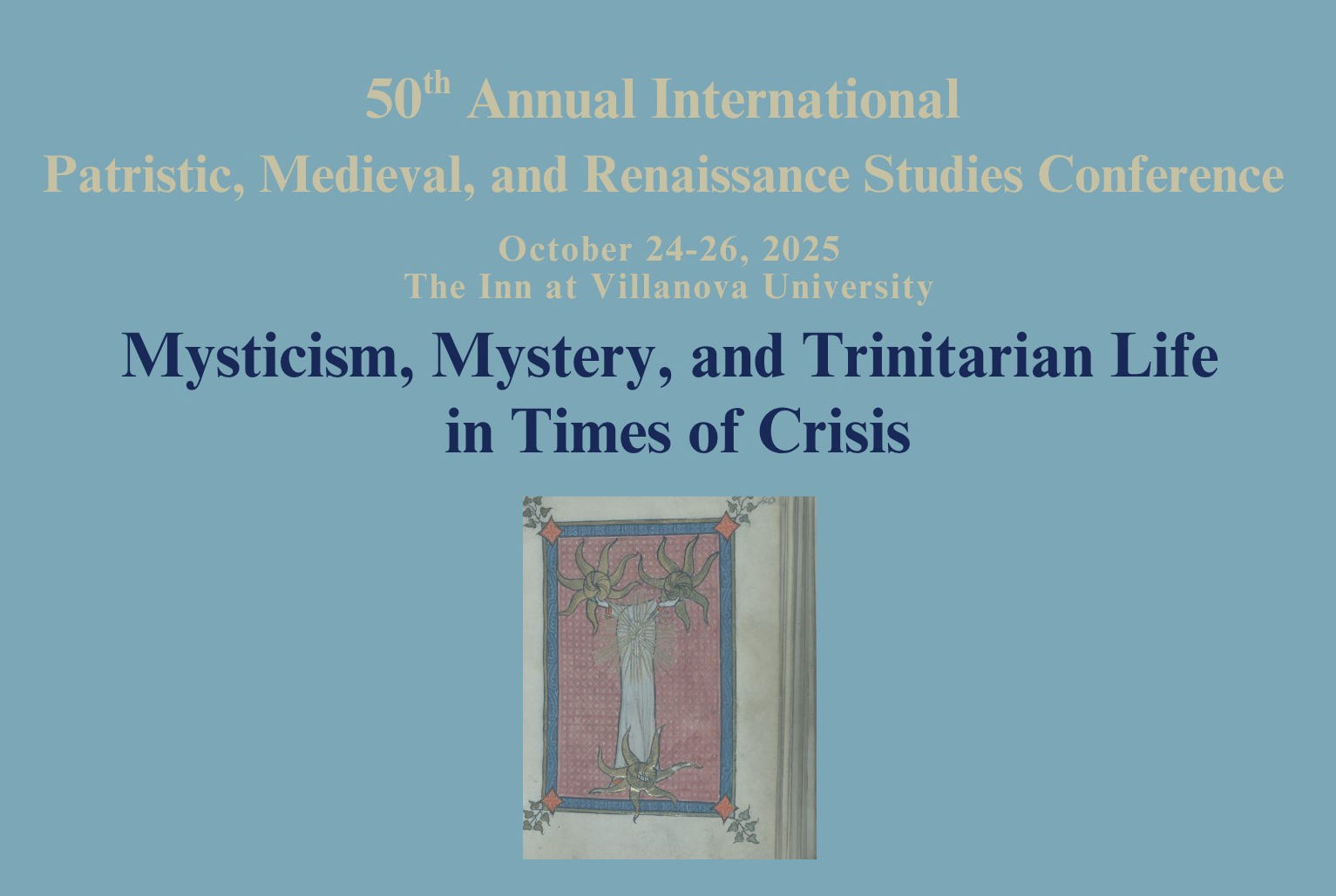
Augustine’s Disciplines and the Unity of De musica
In the six books of De musica,1 the only part of his early disciplinary project that survives, Augustine presents an educational ascent from sensible matter to self-knowledge and knowledge of God through a single arithmetical discipline: music. Many have expressed doubts about the unity of the six books, arguing that the preface of book 6 rejects the disciplinary project represented in the earlier 5 books and other early works like De ordine. My argument to the contrary has four sections. First, I briefly review scholarship that treats the unity of De musica. Second, I outline the composition history of De musica. Third, I’ll argue that the vision of the disciplines in De ordine and De musica books 1-5 is ideologically coherent with the preface of De musica book 6. Finally, I’ll conclude by suggesting that scholarship has overly emphasized a negative shift in Augustine’s later thought regarding the disciplines.
I. The Unity of De musica in Scholarship
Most scholarship maintains that later in his career Augustine decisively rejected the liberal disciplines. To take some examples, James O’Donnell states that Augustine eventually “moved beyond [the liberal arts].”2 Mark Vessey concludes that Augustine’s “mature judgement” was “against the liberal arts as a template for education.”3 Similarly, Kevin Hughes claims that “Augustine’s hostility towards classical liberal education in his later writings seems clear enough.”4 And Danuta Shanzer argues that Augustine later rejected the disciplines, including music due to squeamishness arising from their pagan origin.5
Within scholarship on mus., a local strain of this view prevails: De musica books 1-5 are understood to be consonant with the earlier disciplinary project; book 6 is the revised product of Augustine’s later ecclesiastical and anti-liberal disciplines mindset. Decades ago, Marrou argued that book 6 was composed much later than books 1-5, since it seemed to him more religious.6 It also appears to reveal a negative attitude towards the disciplines, calling them “childish,” “trifling,”—plane pueriliter, nugacitas, vilis via, and puerilia.7 Most scholars continue to follow Marrou.8 As Jacobsson in the preface to his recent critical edition of De musica argues, “Augustine’s appraisal of the subject seems to be different in books 1-5 than in the preface to book 6 […].”9 He points to the “real problem” of book 6, where Augustine uses terms like nugacitas and plane pueriliter to characterize the disciplinary material in books 1-5:10
All in all, Marrou’s thesis that the preface […] to book 6 was added by Augustine at a later time seems to be the best way of accounting for the discrepancies […]. We may suppose that the emendatio happened at a time not very far from the composition of the rest of book 6, but far enough to allow for Augustine’s obvious change of mind regarding the importance of the artes liberales.11
Thus, the theory that Augustine abandoned the disciplines is used to justify the supposed shift in tone between books 1-5 and the preface of book 6 (and vice versa). By contrast, I suggest that book 6 is consonant with his earlier vision of the disciplines.12
II. The composition of De musica
In De ordine (386), Augustine describes the liberal disciplines as part of a philosophical ascent from the sensible world to self-knowledge and knowledge of God.13 The disciplines include preliminary studies, then grammar, dialectic, rhetoric, music, geometry, astronomy, arithmetic, and philosophy. In his Retractions, Augustine later recalls how he subsequently began and failed to complete the ambitious project of writing encyclopedic books on each of the disciplines [Handout 1]:
1. At the very time that I was about to receive baptism in Milan, I also attempted to write books on the liberal arts, questioning those who were with me and who were not adverse to studies of this nature, and desiring by definite steps, so to speak, to reach things incorporeal through things corporeal and to lead others to them. But I was able to complete only the book on grammar—which I lost later from our library—and six books, On Music, pertaining to that part which is called rhythm. I wrote these six books, however, only after I was baptized and had returned to Africa from Italy, for I had only begun this art at Milan. Of the other five arts likewise begun there—dialectic, rhetoric, geometry, arithmetic, and philosophy—the beginnings alone remained and I lost even these. However, I think that some people have them. (trans: Bogan).14
Awaiting baptism in Milan in 387, he completed a book on grammar. He also began work on De musica and the introductions or outlines (principia) for five other disciplines: dialectic, rhetoric, geometry, arithmetic, and philosophy. In 388 he returned to Carthage and from there to Thagaste, where he stayed until he moved to Hippo in 391. He wrote most of De musica during this period (388-391).15
Twenty years later (408/9), Augustine gives more information in his Epistle 101 to the bishop Memorius.16 Memorius had written requesting De musica for his son Julian. Augustine admits that he has not sent the work because it remains uncorrected. Although he wishes to correct it, he is prevented from doing so by many pressing duties:
2. I ought, therefore, already to have sent the books that I promised that I would correct, and I did not send them because I have not corrected them, not because I did not want to but because I could not, occupied as I was by many serious concerns. (trans: Teske).17
Despite his condemnation of contemporary education earlier in the letter, his assessment of the disciplinary ascent in De musica remains positive.18 He uses the present tense when describing his reasons for originally embarking on the project. Because contemplation of number in music advances to the most intimate regions of truth, he originally wished to write books on music. But then ecclesiastical cares were imposed upon him and these delights fled from his hands. Nonetheless, He continues to recognize the important place of the disciplines in the pursuit of unchanging realities and then cites scripture to complement his reasoning:
3. But in all the movements of things the power of number is more easily studied in human words, and that study strives by certain ascents to rise, as if by steps, to higher and inner realms of truth. On these roads wisdom reveals herself joyously and meets her lovers with all providence [Wis. 6:17]. In the beginning of our leisure, when my mind was free from greater and more important cares, I wanted to compose an introduction to such a pursuit with these writings that you have wanted to receive from us, when I wrote six books exclusively on rhythm, and I was, I admit, planning to write perhaps another six on melody, when I hoped that I would have leisure. But after the burden of ecclesiastical cares was imposed on me, all those delights fled from my hands, so that I can now scarcely find the manuscript. (trans: Teske, modified).19
Consequently, he clearly explains his reasons for sending only book 6, which he has corrected, and which contains “the fruit” of the other books:
4. Five books of it are, of course, very difficult to understand, if no one is present who can not only distinguish the persons engaged in the discussion but can also sound the lengths of the syllables by pronouncing them aloud. For only in that way can the different kinds of meter be expressed and impressed upon the sense of hearing, especially since in certain meters measured silent pauses are intermingled, which cannot be perceived at all unless the speaker makes them clear to the hearer. I have, of course, not delayed in sending to Your Charity the sixth book, which I found already corrected and which contains the fruit of the rest. (trans: Teske).20
Nowhere does he suggest doctrinal concerns with the disciplinary content of books 1-5 or his disciplinary project. Rather, the interlocutors in books 1-5 were not yet marked and the complex metrical materials could not be easily understood without additional explanation.21 Since book 6 contains “the fruit” of the other books, he clearly does not intend to denigrate their content. After all, books 1-5 are summarized at length midway through book 6. Augustine’s concerns with books 1-5 are explicitly mechanical, not doctrinal. If he had the time to correct them as he wished, he would send them to Memorius. Thus, by his mid-career Augustine shows no explicit doctrinal discomfort with the De musica.
III. The Ideological Coherence of De ordine, De musica 1-5, and De musica 6
In De ordine Augustine outlines his initial vision of the educational ascent through the disciplines. The prerequisite is moral formation pertaining to nearly every aspect of life, including food, sex, sleep, money, prayer, and worship (ord. 2, 8, 25). Only then can intellectual formation be undertaken profitably. Most Christians follow the path of authority, while a few proceed beyond the path of authority to the path of reason through the liberal disciplines (ord. 2, 9, 26). Augustine personifies a figure of Reason, who outlines preliminary studies (that is, counting, reading, and writing) (ord. 2, 12, 35), grammar (ord. 2, 12, 36-37), dialectic (ord. 2, 12, 38), and rhetoric (ord. 2, 12, 38). She then desires to ascend to the contemplation of divine things by an ordered path, but is impeded by her senses:
5. From here, Reason wished to take herself to the happiest contemplation of the divine things themselves. But lest she fall from on high, she sought steps [of ascent], and she built a path for itself through her own possessions and order. For she longed for a beauty that, along and unmixed, she could gaze upon without these eyes of ours; [yet] she was being impeded by the senses. (trans: Foley, modified).22
The first contemplative discipline is music.23 Music pertains to both corporeal and incorporeal worlds and can thus serve as a step between them. In the corporeal sounds of music—the long and short syllables, rhythms, meters, verses, Reason beholds incorporeal number, something unchanging and divine (ord. 2, 14, 41). In comparison with this she scorns the material aspect of the discipline. Sound itself is “most worthless” if unorganized by number (vilissimam):
6. Reason saw, however, that this material was worthless if the sounds aren’t formed by a certain measuring of intervals and by a moderated variation of high and low pitch. (trans: Foley).24
As she investigates eternal number through music, she tolerates the corporeal material of voice only with extreme difficulty:
7. Therefore in this fourth step [= music], whether in rhythm or in cadence itself, Reason understood that numbers rule and perfect the whole. It most diligently examined of what sort they might be; and, chiefly because it had woven together all of the above with these very aids, it discovered that they are divine and sempiternal. And by now she was enduring most reluctantly the fact that the splendor and serenity of these things was being discolored by the bodily matter of voices. (trans: Foley).25
Thus, already in De ordine Augustine devalues the corporeal aspect of music, although he maintains its necessity within the process of education. All the arithmetical disciplines—music, geometry, and astronomy—are similar. From the vestiges and shadows of number in corporeal and sensible things, Reason rises to a knowledge of eternal truths:
8. Therefore, in all these disciplines [music, geometry, astronomy], Reason kept bumping into all things numerical. Still, they were standing out more clearly in those dimensions that Reason was gazing upon as most true when thinking and mulling things over within her very self. But in those things that are sensed, Reason instead was reflecting on their shadows and vestiges. (trans: Foley, modified).26
Finally, through reflection on the nature of number, the soul turns inwards to inspect itself and then upwards to understand God.27 When the soul has rendered itself harmonious and beautiful by moral and intellectual training, it can glimpse God, the font of truth.
Augustine’s view of education in De ordine remains surprisingly broad. Although the disciplines are important for the educational path of reason, most people follow the path of authority. Monica is a reminder of the soaring achievements of those who are completely uneducated in the disciplines and who have ascended through faith and good morals. He warns her not to be frightened “by the immense forest” of disciplinary material under discussion. She can easily understand what is necessary, since her mind is already distant “from all trifles and from the great defect of the flesh”:
9. However, I beseech you, mother: don’t let the fact that we need some of these [disciplines] for what we are seeking frighten you like some immense forest of things. Indeed, from all of them certain things will be chosen that are very few in number but very mighty in power, though certainly for many people learning them is difficult. For you, however—you whose intellectual aptitude is made known to me daily and whose mind, either because of your age or admirable temperament is far removed from all trifles and emerging from the great defect of the flesh, has, I know, risen up high within itself—for you they will be as easy as they are difficult for those who aren’t terribly swift and for those who are living most miserably. (trans: Foley, modified).28
Monica has already achieved more than can be achieved through grammatical details, geometrical proofs, or other “childish” things:
10. But you, having disregarded those things that are either childish or irrelevant to you, will so come to know the almost divine power and nature of grammar that it will seem you are holding onto its very soul and leaving its body behind for the eloquent. And I could even say this about the other arts of this sort. If you disdain them completely perhaps, I advise you—insofar as I dare as your son and insofar as you permit—to guard, firmly and cautiously, that faith of yours which you have seized through the venerable mysteries and to remain henceforth in this life and with these mores, consistently and vigilantly. (trans: Foley, modified).29
She should not return to the disciplines; rather, Augustine boldly advises her, she should persist in faith and the moral life. The majority of unlearned Christians will come to knowledge of God by faith and good morals—the way of authority—not by the tedious road of reason through disciplinary learning pursued nonetheless by Augustine and his heady interlocutors.30 As Fuhrer rightly concludes, “The religious attitude of a simple Christian is thus put on the same level as the intellectual quest of the educated.”31
Augustine closely follows the educational vision of De ordine in De musica 1-5, moving from a brief discussion of preliminary studies and grammar to music—metrical feet, rhythm, meter, verse, etc.32 Like De ordine, books 1-5 of De musica insist that the student must finally turn away from the sensible content of music and look inwards and upwards towards philosophy. Like De ordine, in De musica 1, the teacher and student agree to follow the vestiges (vestigia) of music in sensible things and so finally to reach its sanctuaries:
11. And since music somehow issuing forth from the most secret sanctuaries leaves vestiges in our very senses or in things sensed by us, mustn’t we follow through those vestiges to reach without fail, if we can, those very places I have called sanctuaries? (trans: Taliaferro, modified).33
By the end of book 5, the teacher announces an end to the technical discussion of music that pertains to “sensible vestiges” and decides to move on to where music is “disconnected from all body”:
12. But if you have nothing to the contrary, let this be the end of the discussion, so we may next go with as much wisdom as we can from these sensible traces of music, all dealing with that part of it in the numbers of the times to the real places where it is free of all body. (trans: Taliaferro, modified).34
Augustine’s entire theory of the disciplines in both the De musica 1-5 and the De ordine is predicated on transcending matter—and ultimately the corporeal aspects of the disciplines themselves. It would be very strange indeed if a book like De musica 6 did not follow the technical, corporeal considerations of books 1-5.
Turning now to the problematic beginning of De musica 6, the teacher reiterates that he and the student have delayed “in a clearly youthful/childish fashion” (plane pueriliter) through five books “among the vestiges of number”:
13. We have delayed long enough and thus far in a clearly childish fashion through five books, in those vestiges of number belonging to time-intervals. (trans: Taliaferro, modified).35
Augustine uses the adjective puerilis elsewhere to describe studies in the positive or neutral sense of “youthful” or “undertaken in youth.” The adverb pueriliter is thus not automatically negative. But its use here probably has the qualified negative valence seen in ord. 2, 17, 45-46 (cf. quotation 10 above), where Augustine pointed out that Monica has already achieved the soul of grammar while leaving its body, the sensible part of the discipline, among “childish things.” The “youthful” disciplines can become negatively “childish” if they do not lead to something higher, go on for too long, or are undertaken by those like Monica who have already risen above them. Indeed, as he says in De ordine, nothing should be feared more than excess in learning (ord. 2, 5, 14). The use of pueriliter in this qualified negative sense is pedagogically fitting at the beginning of book 6, as the teacher stresses the importance of moving away at last from the sensible material of music, which was scarcely tolerable to Reason in De ordine.
Next, the teacher justifies the extensive time spent in books 1-5 on the sensible matter of music:
14. And let’s hope a dutiful labor will readily excuse our triviality in the eyes of benevolent men. For we only thought it ought to be undertaken so adolescents or men of any age God has endowed with a good natural capacity, might with reason guiding be torn away, not quickly but by certain steps, from the fleshly senses and letters it is difficult for them not to stick to, and adhere with the love of unchangeable truth to the one God and Master of all things who with no mean term whatsoever directs human minds. (trans: Taliaferro, modified).36
Marrou’s problematic word is nugacitas (= “frivolousness” or “triviality”). Like pueriliter, the word should be understood in a qualified negative sense. Sensible details of music are nugae “trifles” when compared with the goal of the discipline in self-knowledge and knowledge of God. Similarly, Augustine in De ordine warns Monica not to be deterred “by the immense forest” of disciplinary material, since her mind is already distant “from all trifles.” Here Augustine uses a related word, not to disown absolutely the disciplinary material under discussion, but to underscore its worthlessness compared to its goal that those like Monica achieve by another path. Monica has no need to return to the comparative trivialities of grammar (nor should the student stay stuck in books 1-5). As with pueriliter above, the description of De musica 1-5 as a nugacitas is entirely consonant with Augustine’s vision in De ordine and does not represent a rejection of the specific role of the disciplines in education. Indeed, this passage is a justification of books 1-5; they are part of the gradual ascent from matter to God by certain steps [cf. quotation 5 above]. For Augustinian education to be successful, the student must indeed move beyond the sensible matter of music or any other discipline, in an ordered fashion with Reason guiding the way.
The teacher insists that the technical content of De musica 1-5 should not be misunderstood to represent the final goal of the discipline of music. And although the path through the disciplines is “humble” (vilem viam) it is not “a humble possession” (vilis possessionis), since for those whose wings are not strong enough it is better to walk through the path of the disciplines than tumble headlong through the air:
15. But when he comes to this book, if, as I hope and pray, one God and Lord has governed my purpose and will and led it to what it was intent upon, he will understand this humble path is not of little value, this way we, too, not very strong ourselves have preferred to walk, in company with lighter persons, rather than to rush with weaker wings through the freer air. (trans: Taliaferro, modified).37
Again, this vision is consonant with the orderly ascent of De ordine (in quotation 5) and with the language of De ordine (in quotation 6), in which sound is indeed considered vilissimam. When organized as part of the discipline of music, however, it can become part of a path upwards.
Finally, the teacher addresses those who have already advanced in Christian life through the sacraments:
16. But I fraternally warn those others not educated to understand these things, if, steeped in the sacraments of Christian purity and glowing with the highest charity for the one and true God, they have passed over all these childish things, for fear they descend to them and, having begun to labor here, bewail their backwardness, not knowing they can pass over difficult roads and obstacles in their path, even if unknown, by flying. (trans: Taliaferro, modified).38
Since they have attained the aim of the disciplines by another path, they have no need for the puerilia of education. The use of puerilia is similar to that of pueriliter above. Augustine “fraternally” addresses the uneducated who have already made great progress in the spiritual life apart from the disciplines, recommending that they do not return to the childish things of disciplinary education that they have already far surpassed. As we have seen, he gives similar advice to Monica in De ordine.39 There is no abrupt shift in Augustine’s vision of the disciplines between De ordine, De musica 1-5, and De musica 6.
4. Augustine and the Disciplines
We have seen how De musica 6 has been used to demonstrate a souring towards the disciplines in Augustine’s later career. I have suggested that it is coherent with Augustine’s initial vision of the disciplines, which was never unqualifiedly positive. From the first outlines of his disciplinary project in De ordine, Augustine repudiates the excesses of contemporary education (ord. 2, 12, 37) and continues to make such criticisms frequently. The disciplines themselves are always seen as puerilia or nugae and must be transcended if the student is to mature properly. Augustine was never interested in the education of musicians or geometers, but in the formation of lovers of God. Thus, he cautions against overly extensive study of the disciplines before he begins his disciplinary project (ord. 2, 5, 14), within the disciplinary project itself (mus. 1, 1, 1), and after he adapts the disciplines to the study of scripture (doctr. chr. 2, 140). The disciplines must not be undertaken through idle curiosity for the things of the sensible world.40 If De musica 6 were not to turn away from the sensible world as it does, it would represent an unreconcilable and inexplicable shift from Augustine’s disciplinary vision and would truly be inconsonant with the rest of his thinking on the disciplines—both early in his career and later.
Towards the end of his life in Retractions (426–7), Augustine strongly reaffirms the importance of the arithmetical disciplines, particularly music. He recalls the popularity of De musica 6, and the significance of its subject matter, describing the project in terms that are applicable to any arithmetical discipline:
17. Next, as I mentioned above, I wrote six books On Music. The sixth of these became especially well known because in it a subject worthy of investigation was considered, namely, how, from corporeal and spiritual but changeable numbers, one comes to the knowledge of unchangeable numbers which are already in unchangeable truth itself, and how, in this way, “the invisible attributes” of God, “being understood through the things that are made, are clearly seen.” (trans: Bogan).41
Augustine still believes in the arithmetical ascent from corporeal to incorporeal things. He still believes incorporeal numbers exist in immutable truth. He still cites scripture to justify his position (Rom. 1:20). All his verbs remain in the present tense. He never retracts the disciplinary project that he was unable to complete, nor does he diminish its importance. He never truly abandoned the disciplines. And if he never completed his project, the reason was practical, not ideological, as he himself remarks (ep. 101, 3) [quotes 2 and 3]. Augustine the priest and bishop had no time adequately to absorb and expound the vast amounts of disciplinary material necessary to complete the educational encyclopedias. In his later endeavors, he looked back wistfully to those delights that fled from his hands as his world of leisure crumbled. He reused them as far as his newer commitments required. Indeed, when his extensive engagement with the disciplines in De libero arbitrio, De vera religione, De doctrina christiana, the commentaries, sermons, and other later works is considered, the De musica and the abandoned encyclopedias mark only the beginning of his engagement with the disciplines.
For the text, see M. Jacobsson – L. Dorfbauer, Augustinus De Musica, Berlin 2017, which supersedes M. Jacobsson, Aurelius Augustinus. De musica liber VI. A Critical Edition with a Translation and an Introduction, Stockholm 2002. For an overview of the mus., see H. Hentschel, Musica (De –), in edd, R. Dodaro – C. Mayer – C. Müller, Augustinus-Lexikon, Basel 2012, 130-137.
J. O’Donnell, Augustine: Confessions, vol. 2: Commentary on Books 1-7, Oxford 1992, 271. Some scholars have a more attenuated version of this view. See P. Burton, The Vocabulary of the Liberal Arts in Augustine’s Confessions, in edd. K. Pollmann – M. Vessey, Augustine and the Disciplines: From Cassiciacum to Confessions, Oxford 2005, 142: “[Augustine’s] later writings do betray an increasing pessimism about the possibility, or desirability, of a Christianization of the traditional curriculum.”
M. Vessey, Introduction, in edd. K. Pollmann – M. Vessey, Augustine and the Disciplines: From Cassiciacum to Confessions, Oxford 2005, 9.
K. Hughes, The “Arts Reputed Liberal”: Augustine on the Perils of Liberal Education, in edd. K. Paffenroth – K. Hughes, Augustine and Liberal Education, New York 2008, 102.
D. Shanzer, Augustine’s Disciplines: Silent diutius Musae Varronis?, in edd. K. Pollmann – M. Vessey, Augustine and the Disciplines: From Cassiciacum to Confessions, Oxford 2005, 109: “By the time of the Letter to Memor in 408/9 [music] too had largely fallen from [Augustine’s] favour, as had the so-called liberal arts.”
I. Marrou, Saint Augustin et la fin de la culture antique, Paris 1938, 580.
Ibid., 581, n. 2.
U. Pizzani, Il sesto libro, in U. Pizzani – G. Milanese (eds.), «De Musica» di Agostino d’Ippona, Palermo 1990, 69; E. Hermanowicz, Book Six of Augustine’s De musica and the Episcopal Embassies of 408, in Augustinian Studies 35 (2004),175-177. But see the suggestion made by J. O’Donnell, Augustine: Confessions, vol. 2, 275, n. 15: '“It [mus. 6] also drove Marrou, 580-3, to an unnecessary hypothesis about two editions of the work. Ancient works that scandalize the expectations of even great scholars often get rewritten this way.”
M. Jacobsson – L. Dorfbauer, Augustinus, 2.
Ibid., 7.
Ibid., 9.
See H. Hentschel, Musica (De –), 131-132: “Die Kernidee des pädagogischen Projektes bestand darin, die Schüler – ausgehend von empirisch-alltäglichen Beobachtungen – vom Körperlichen zum Unkörperlichen zu führen (z.B. mus. 6,2; retr. 1,11,1sq.). Das Besondere von mus. besteht darin, daß diese Zielsetzung nicht bloßes Postulat bleibt, sondern vollständig durchgeführt wird: Die Betractung von Rhythmen führt, vermittelt über die Frage nach den Ursachen ihrer Schönheit, bis zu einem Gottesbeweis im letzten Buch.”
This section draws from M. Jacobsson – L. Dorfbauer, Augustinus, 1-3 and H. Hentschel, Musica (De –).
1. Per idem tempus, quo Mediolani fui baptismum percepturus, etiam disciplinarum libros conatus sum scribere, interrogans eos qui mecum erant atque ab huiusmodi studiis non abhorrebant, per corporalia cupiens ad incorporalia quibusdam quasi passibus certis vel pervenire vel ducere. Sed earum solum De grammatica librum absolvere potui, quem postea de armario nostro perdidi, et De musica sex volumina, quantum attinet ad eam partem quae rithmus vocatur. Sed eosdem sex libros iam baptizatus iamque ex Italia regressus in Africam scripsi, incohaveram quippe tantummodo istam apud Mediolanium disciplinam. De aliis vero quinque disciplinis illic similiter inchoatis – de dialectica, de rethorica, de geometrica, de arithmetica, de philosophia – sola principia remanserunt, quae tamen etiam ipsa perdidimus; sed haberi ab aliquibus existimo. Aug., retr. 1, 6 (CCSL 57, 17, linn. 40-53). Augustine does not include astronomy in his list of disciplines in retr. 1, 6, but includes it in ord. He may have originally decided not to include it in disc. after writing ord. Or he may have simply not begun it in Milan, but intended to include it later and never started it. Or he may have included it, but by the time of retr. forgotten the precise list of disciplines.
A. Keller, Aurelius Augustinus und die Musik, Würzburg 1993, 153.
For historical background, see E. Hermanowicz, Book Six, 165-198.
debui ergo nunc libros mittere, quos emedaturum me esse promiseram et ideo non misi, quia non emendavi, non quia nolui, sed quia non potui curis videlicet multis et multum praevalentibus occupatus. Aug., ep. 101, 1 (CCSL 31B, 3, linn. 12-15).
2. His condemnations of the current educational practices aimed at falsehood and pride are the same throughout his career: Tu nescis in illa schola graviter me stomachari solitum, quod usque adeo pueri non utilitate ac decore disciplinarum sed inanissimae laudis amore ducerentur, ut quosdam etiam aliena verba recitare non puderet exciperentque plausus – o ingemescendum malum! – ab eisdem ipsis, quorum erant illa, quae recitabant. Aug., ord. 1, 10, 30 (CCSL 29, 104, linn. 61-66).
3. Verum quia in omnibus rerum motibus, quid numeri valeant, facilius consideratur in vocibus eaque consideratio quibusdam quasi gradatis itineribus nititur ad superna intima veritatis, in quibus viis ostendit se sapientia hilariter et in omni providentia occurrit amantibus, initio nostri otii, cum a curis maioribus magisque necessariis vacabat animus, volui per ista quae a nobis desiderasti scripta proludere, quando conscripsi de solo rhythmo sex libros et de melo scribere alios forsitan sex, fateor, disponebam, cum mihi otium futurum sperabam. Sed posteaquam mihi curarum ecclesiasticarum sarcina imposita est, omnes illae deliciae fugere de manibus, ita ut vix nunc ipsum codicem inveniam […]. Aug., ep. 101, 3 (CCSL 31B, 5, linn. 55-65).
4. Difficilime quippe intelleguntur in eo quinque libri, si non adsit, qui non solum disputantium possit separare personas, verum etiam pronuntiando ita sonare morulas syllabarum, ut eis exprimantur sensumque aurium feriant genera numerorum, maxime quia in quibusdam etiam silentiorum dimensa intervalla miscentur, quae omnino sentiri nequeunt, nisi auditorem pronuntiator informet. Sextum sane librum, quem emendatum repperi, ubi est omnis fructus ceterorum, non distuli mittere caritati tuae. Aug., ep. 101, 3-4 (CCSL 31B, 5, linn. 69-70 – 6, linn. 71-77).
Didactic aids were eventually inserted into mus. 2, 8, 15 in some manuscripts. Cf. M. Cutino, Per una interpretazione della prefatio al VI libro del De musica di Agostino, in Augustinianum 37 (1997), 148-149, n. 11; M. Jacobsson – L. Dorfbauer, Augustinus, 25.
5. Hinc se illa ratio ad ipsarum divinarum rerum beatissimam contemplationem rapere voluit. Sed ne de alto caderet, quaesivit gradus atque ipsa sibi viam per suas possessiones ordinemque molita est. Desiderabat enim pulchritudinem, quam sola et simplex posset sine istis oculis intueri; impediebatur a sensibus. Aug., ord. 2, 14, 39 (CCSL 29, 129, linn. 1-6).
Since it is the only arithmetical discipline whose sensible matter pertains to words, music also acts like a hinge or fulcrum between the literary and arithmetical disciplines that would become the trivium and quadrivium. See W. Hübner, Die artes liberales im zweiten Buch von De ordine, in Augustinus 39 (1994), 329.
6. Videbat autem hanc materiam esse vilissimam, nisi certa dimensione temporum et acuminis gravitatisque moderata varietate soni figurarentur. Aug., ord. 2, 14, 40 (CCSL 29, 129, linn. 20-239).
7. In hoc igitur quarto gradu [= musica] sive in rhythmis sive in ipsa modulatione intellegebat regnare numeros totumque perficere; inspexit diligentissime cuiusmodi essent; reperiebat divinos et sempiternos, praesertim quod, ipsis auxiliantibus omnia superiora contexuerat. Et iam tolerabat aegerrime splendorem illorum atque serenitatem corporea vocum materia decolorari. Aug., ord. 2, 14, 41 (CCSL 29, 129, linn. 41-44 – 130, lin. 45).
8. In his igitur omnibus disciplinis occurrebant ei omnia numerosa, quae tamen in illis dimensionibus manifestius eminebant, quas in se ipsa cogitando atque volvendo intuebatur verissimas, in his autem quae sentiuntur, umbras earum potius atque vestigia recolebat. Aug., ord. 2, 15, 43 (CCSL 29, 130, linn. 17-21).
Augustine divides philosophy into two branches, one concerning the soul (de anima) and the other concerning God (de Deo) (ord. 2, 18, 47; cf. sol. 1, 2, 7).
9. Quod vero ex illis ad id, quod quaerimus, opus est, ne te quaeso, mater, haec velut rerum inmensa quaedam silva deterreat. Etenim quaedam de omnibus eligentur numero paucissima, vi potentissima, cognitione autem multis quidem ardua, tibi tamen, cuius ingenium cotidie mihi novum est et cuius animum vel aetate vel admirabili temperantia remotissimum ab omnibus nugis et a magna labe corporis emergentem in se multum surrexisse cognosco, tam erunt facilia quam difficilia tardissimis miserrimeque viventibus. Aug., ord. 2, 17, 45 (CCSL 29, 131, linn. 1-9).
10. Sed tu contemptis istis vel puerilibus rebus vel ad te non pertinentibus ita grammaticae paene divinam vim naturamque cognosces, ut eius animam tenuisse, corpus desertis reliquisse videaris. Hoc etiam de ceteris huius modi artibus dixerim, quas si penitus fortasse contemnis, admoneo te, quantum filius audeo quantumque permittis, ut fidem istam tuam, quam venerandis mysteriis percepisti, firme cauteque custodias, deinde ut in hac vita atque moribus constanter vigilianterque permaneas. Aug., ord. 2, 17, 45-46 (CCSL 39, 132, linn. 20-28).
Aug., ord. 2, 9, 26; mus. 6, 17, 59.
T. Fuhrer, Conversationalist and Consultant: Augustine in Dialogue, in A Companion to Augustine, ed. M. Vessey, Malden 2012, 273.
In mus. 1, the teacher establishes the boundaries of music vis-à-vis grammar (as Reason did in ord. 2, 14, 39) and describes the necessary preliminary studies in arithmetic (as Reason did in ord. 2, 12, 35). In mus. 2, 1, 1 – 8, 15, the teacher arranges the various metrical feet into a fixed system (= disponere in ord. 2, 14, 40). He then unites the various feet into harmonious combinations in mus. 2, 9, 16 – 14, 26 (= coniungere in ord. 2, 14, 40). In mus. 3, 1, 1 – 2, 4, the teacher distinguishes between rhythm, meter, and verse; in mus. 3-4, he provides a detailed account of meters; in mus. 5, he turns to verse. Thus, the unfolding of mus. 2-5 is consonant with the summary vision of music in ord. 2, 14, 39-40, albeit with some additional details.
11. Quam ob rem cum procedens quodammodo de secretissimis penetralibus musica in nostris enim sensibus vel his rebus, quae a nobis sentiuntur, vestigia quaedam posuerit, nonne oportet eadem vestigia prius persequi, ut commodius ad ipsa, si potuerimus, quae dixi, penetralia, sine ullo erore ducamur? Aug., mus. 1, 13, 28 (CSEL 102, 94, linn. 7-10).
12. Sed iam, si nihil habes, quod contradicas, finis sit huius disputationis, ut deinceps, quod ad hanc partem musicae attinet, quae in numeris temporum est, ab his vestigiis eius sensibilibus ad ipsa cubilia, ubi ab omni corpore aliena est, quanta valemus sagacitate veniamus. Aug., mus. 5, 13, 28 (CSEL 102, 191, linn. 19-20 – 192, linn. 21-22).
13. Satis diu paene atque adeo plane pueriliter per quinque libros in vestigiis numerorum ad moras temporum pertinentium morati sumus. Aug., mus. 6, 1, 1 (CSEL 102, 193, linn. 1-2).
14. Quam nostram nugacitatem apud benivolos homines facile fortassis excuset officiosus labor, quem non ob aliud suscipiendum putavimus, nisi ut adolescentes vel cuiuslibet aetatis homines, quos bono ingenio donavit deus, non praepropere sed quibusdam gradibus a sensibus carnis atque a carnalibus litteris, quibus eos non haerere difficile est, duce ratione avellerentur atque uni deo et domino rerum omnium, qui humanis mentibus nulla natura interposita praesidet, incommutabilis veritatis amore adhaerescent. Aug., mus. 6, 1, 1 (CSEL 102, 193, linn. 2-8).
15. Ad hunc autem librum cum venerit, si – ut spero et supplex deprecor – deus et dominus noster propositum meum voluntatemque gubernaverit et eo, quo est intenta perduxerit, intelleget non vilis possessionis esse vilem viam, per quam nunc cum imbecillioribus nec nos ipsi admodum fortes ambulare maluimus quam minus pennatos per liberiores auras praecipitare. Aug., mus. 6, 1, 1 (CSEL 102, 193, linn. 10-15).
16. Reliquos vero, qui ad ista intellegenda eruditi non sunt, si sacramentis Christianae puritatis imbuti in unum et verum deum summa caritate nitentes cuncta puerilia transvolaverunt, fraterne admoneo, ne ad ista descendant et, cum hic laborare coeperint de tarditate sua conquerantur, ignorantes itinera difficila et molesta pedibus suis volando se posse etiam ignorata transire. Aug., mus. 6, 1, 1 (CSEL 102, 193, linn. 21-25).
M. Cutino, Per una interpretazione, 155-157, argues instead that this final section departs significantly from Augustine’s vision in ord.
In quorum consideratione non vana et peritura curiositas exercenda est, sed gradus ad immortalia et semper manentia faciendus. Aug., vera rel. 29, 52, 144 (CCSL 32, 221, linn. 10-12).
17. Deinde, ut supra commemoravi, sex libros de musica scripsi, quorum ipse sextus maxime innotuit, quoniam res in eo cognitione digna versatur, quomodo a corporalibus et spiritalibus sed mutabilibus numeris perveniatur ad inmutabiles numeros, qui iam in ipsa sunt inmutabili veritate, et sic invisibilia dei per ea quae facta sunt intellecta conspiciantur. Aug., retr. 1, 11, 1 (CCSL 57, 33, linn. 2-7).